

Best Time to Pour Concrete in Iowa: A Homeowner's Guide
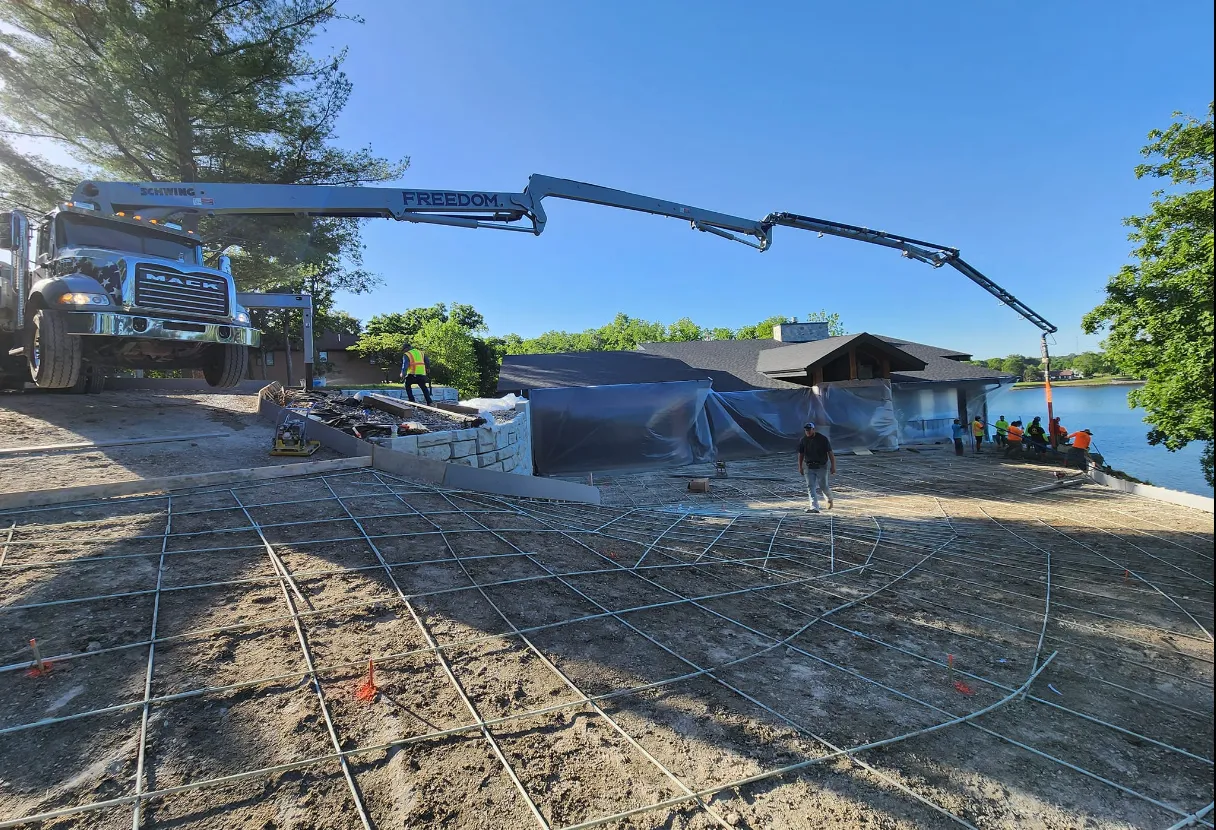
The best time to pour concrete in Iowa is usually spring through fall, but there is no single perfect month for every project. Temperature, moisture, subgrade conditions, curing, and contractor availability all matter. If you are also wondering how long concrete takes to cure, timing matters because the weather during those early days can influence how the slab develops strength and handles Iowa winters.
This guide expands on Episode 7 of The Concrete Blueprint, “When Is the Best Time of Year to Pour Concrete in Iowa?”, where Andrew Quick, owner of Quick Concrete Solutions in Waukee, a western suburb of Des Moines, explains how he plans concrete work for homeowners from Ankeny to Urbandale.
What Months Are Best for Pouring Concrete in Iowa?
For most residential projects in Iowa, April through late October is the most practical concrete season, with some work extending into November when conditions cooperate. Quick Concrete Solutions schedules most residential work, such as concrete driveways and patios, within that window because it balances workable temperatures, manageable ground conditions, and fewer cold-weather protection requirements.
Not every day between April and October is equally good. A mild April week can turn problematic after heavy rain, while extreme July heat can speed setting and moisture loss.
Iowa’s climate is the reason homeowners should think in terms of conditions, not just calendar dates. The National Weather Service publishes Iowa climate normals showing major seasonal swings in temperature, precipitation, frost, and freeze timing. Those shifts are exactly why a local contractor has to adjust preparation and curing practices throughout the year.
Is Spring a Good Time to Pour Concrete in Iowa?
Spring can be one of the better times to pour residential concrete in Iowa because moderate temperatures and available moisture can support controlled curing.
Concrete does not simply “dry.” It gains strength through hydration, a chemical reaction between cement and water. Cooler conditions generally slow that reaction, while higher temperatures speed it up. The American Concrete Institute notes that higher curing temperatures can increase early strength but may reduce later-age strength compared with cooler curing conditions.
Spring also gives a new driveway or patio months before Iowa’s winter deicing season. Andrew Quick of Quick Concrete Solutions points out that this extra time before winter is one reason he likes spring pours for residential work.
The main drawback is rain. If a driveway has been torn out and the subgrade becomes saturated, pouring too soon can create avoidable problems. Quick Concrete Solutions would rather wait for the base to recover than rush concrete onto a compromised site. In some cases, additional excavation and rock can help, but that adds cost.
Fresh spring concrete should also be protected from fertilizer, which can discolor or damage the surface. Our guide to the first-year mistakes that damage new concrete in Iowa covers fertilizer, salt, and sealing in more detail.
Is Summer Really the Best Time to Pour Concrete?
Summer is convenient, but it is not automatically the best season for concrete in Iowa.
June, July, and August often bring more dependable working weather. That can reduce rain delays and make demolition, grading, forming, and placement easier to schedule.
The tradeoff is heat. Hot weather can accelerate setting and moisture loss, making subgrade preparation, mix selection, placement timing, finishing, and curing especially important.
Iowa DOT training materials make the same general point for pavement work: in hot weather, higher concrete temperatures can contribute to rapid stiffening and create placement and finishing challenges.
Availability can be an even bigger issue for homeowners. Established contractors are often booked well ahead during summer. Quick Concrete Solutions commonly sees quality contractors booked four to eight weeks out, and summer openings can disappear months in advance.
If summer is your preferred window, start planning before the weather turns warm.
Why Can Fall Be an Excellent Time to Pour Concrete?
Fall can offer some of Iowa’s best concrete weather because temperatures are often moderate and humidity can be easier to manage than during peak summer heat.
Andrew Quick calls fall one of his favorite pouring seasons. Cooler conditions can make placement more manageable, and concrete may cure more gradually than it would during extreme summer temperatures.
The calendar also starts working against you. Rain can cause delays, schedules compress, and every week moves closer to freezing conditions. Late requests often leave fewer options.
Cost can also rise late in the season. Contractors may need additional protection, blankets, heated enclosures, mix adjustments, or other cold-weather measures as temperatures drop.
The takeaway is simple: fall can be excellent, but it rewards early scheduling.
How Does Temperature Affect How Long Concrete Takes to Cure?
Temperature changes how long concrete takes to cure, because cooler weather slows hydration and warmer weather speeds it up, so good contractors adjust their process instead of treating every pour the same.
Concrete curing means maintaining suitable moisture and temperature conditions after placement so concrete can develop its intended properties. Mild weather can make that easier, but good crews can adapt to hotter or colder conditions. For a typical driveway mix, Andrew Quick said on Episode 6 that homeowners can usually drive on new concrete after five to seven days, with heavy trucks waiting closer to 10 to 12 days, depending on the weather.
The Iowa DOT’s current pavement specifications show how seriously temperature and curing are treated in professional concrete work. For certain pavement applications, the state requires curing compound soon after finishing and adds specific protection requirements when nighttime temperatures fall near or below freezing.
Residential concrete is not governed by that exact specification, but the principle is useful: temperature affects the plan. A contractor should be thinking about the mix, subgrade, weather forecast, finishing window, and curing method before the truck arrives.
How Do Rain and Freeze-Thaw Cycles Affect Iowa Concrete?
Water can help curing at the right time, but uncontrolled water around or beneath concrete can create long-term problems.
This is one of the most important distinctions for Iowa homeowners. Moisture retained in concrete during curing supports hydration. Saturated ground beneath a slab is a different issue. Once water enters the soil and temperatures move above and below freezing, expansion and contraction can contribute to movement below driveways, patios, sidewalks, and other flatwork.
Andrew Quick describes water as a “double-edged sword” because its effect depends on where it is and when it arrives.
That is why drainage and subgrade preparation matter as much as the pour-day forecast. Iowa regularly moves through freezing and thawing conditions, so water management is part of long-term durability. That same freeze-thaw movement is a big part of what makes concrete driveways crack in Iowa.
Why Does Iowa Soil Make Concrete Projects More Complicated?
Iowa’s ground conditions vary enough that contractors need to evaluate the actual site instead of relying on a one-size-fits-all base plan.
Andrew Quick notes that different parts of the state can have very different combinations of rock, topsoil, sand veins, underground water, and changing water tables.
Concrete performance starts below the slab. Excavation depth, compacted base, drainage, and existing soil conditions all influence support.
This is one reason local experience carries real value. Quick Concrete Solutions works across Central Iowa and the Des Moines metro on driveways, patios, walkways, garage floors, parking lots, and other flatwork.
A contractor who understands local soil and weather can make site-specific decisions instead of applying a generic process copied from another climate.
How Far Ahead Should You Schedule a Concrete Project?
Homeowners should ideally begin planning about 60 to 90 days before they want a residential concrete project completed.
Andrew Quick considers roughly 90 days the sweet spot for many homeowners, with about 60 days serving as a practical minimum for projects that require design choices and coordination.
That lead time gives the contractor time to review layout, drainage, access, pump-truck needs, materials, and future features such as a hot tub. It also lets homeowners coordinate family schedules and neighborhood access before excavation starts.
Quick availability is not always a positive signal. A full planning window can help protect project quality.
Can You Pour Concrete During an Iowa Winter?
Yes. Concrete can be poured in Iowa during winter, but the process becomes more expensive and more technical.
Cold weather slows hydration and creates a risk of early freezing if fresh concrete is not protected. The American Concrete Institute states that cold-weather concrete can achieve the required strength and durability when it is properly produced, placed, and protected.
Protection may involve warmed materials, insulating blankets, enclosures, temperature monitoring, or admixtures.
Quick Concrete Solutions pours year-round when a project calls for it, but Andrew notes that winter residential work usually costs more. Commercial projects are more likely to justify that expense when a business opening or construction deadline cannot wait.
When Should You Schedule Your Iowa Concrete Project?
The best time is the season when your site, weather, schedule, and contractor can line up without compromising the work.
Spring offers moderate conditions with more rain risk. Summer brings dependable working weather but more heat and demand. Fall offers strong conditions with less room before winter. Winter is possible but usually more expensive.
That is why Andrew Quick’s line from The Concrete Blueprint is useful: “There is no quote-unquote best time, but there is a quote-unquote best company.”
A homeowner asking how long concrete takes to cure is asking the right kind of question, but curing is only one piece of the schedule. The better question is whether the contractor has planned the entire project around Iowa’s actual conditions. When you know your target season, request a free estimate so the project can be planned 60 to 90 days ahead.
Watch the Full Podcast Episode
Want to hear the full conversation behind these insights? Watch Andrew Quick and host Mike Downer on The Concrete Blueprint as they dig deeper into Iowa pouring seasons, curing, rain, soil conditions, scheduling, and why summer is not always the automatic winner. Visit the Quick Concrete Solutions YouTube channel and watch the full episode, answering questions like “When Is the Best Time of Year to Pour Concrete in Iowa?” and more, for practical advice straight from an Iowa concrete professional.
FAQs About the Best Time to Pour Concrete in Iowa
How long does concrete take to cure?
Curing time depends on the mix and the weather. For a typical driveway mix, Quick Concrete Solutions generally recommends waiting five to seven days before normal vehicle use and about 10 to 12 days before heavy trucks or equipment.
What temperature is best for pouring concrete in Iowa?
Moderate temperatures are generally easier to work with than extreme heat or cold. The exact acceptable range depends on the mix, project, curing plan, and weather conditions. Experienced contractors adjust placement and protection methods rather than relying on one ideal temperature.
Can concrete be poured after it rains?
Yes, if the site is ready. The main concern is whether rain has saturated or softened the prepared subgrade. Pouring over unstable ground can create problems, so a contractor may delay the project until the base dries or make additional base corrections.
Is spring or fall better for pouring concrete?
Both can be excellent. Spring gives concrete more time before winter but often brings heavier rain. Fall can offer comfortable temperatures and good curing conditions, but schedules tighten and cold-weather risks increase as winter approaches.
Should I avoid pouring concrete in July or August?
No. Summer concrete can perform very well. Hot weather simply requires stronger attention to concrete temperature, moisture loss, placement timing, finishing, and curing. Scheduling early is also important because experienced contractors may already be booked.
How far ahead should I book a concrete contractor in Iowa?
For a planned residential project, 60 to 90 days is a useful target. During busy summer and fall periods, contacting contractors even earlier can give you more control over timing and project design.
Can new concrete handle an Iowa winter?
Properly installed and cured concrete is designed to handle seasonal weather, but early care matters. Homeowners should follow the contractor’s instructions regarding deicing chemicals, snow removal, sealing, traffic, and other first-year maintenance.
Can concrete be poured in freezing weather?
Yes, but cold-weather placement requires additional planning and protection. Fresh concrete must be kept from freezing early, and contractors may need insulation, heated materials, enclosures, admixtures, or temperature monitoring.
Why does contractor experience matter so much in Iowa?
Because Iowa combines changing temperatures, rain, freeze-thaw cycles, and varied soil conditions. A contractor familiar with Central Iowa can adjust excavation, base preparation, drainage, mix decisions, placement, and curing to the conditions at the actual job site.